Sunday, December 27, 2009

Blogpost #36

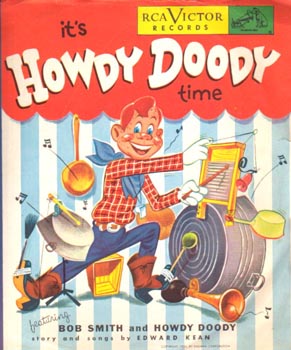
Say, kids, what time is it? It's Howdy Doody Time! December 27, 1941 is Howdy's birthday, according to the Howdy Doody fan club. The truth is that Howdy originated as a voice on Bob Smith's radio show around 1947. He character was originally named Elmer, but his annoying habit of saying "Howddeee-dooodeee" gave him his famous nickname.

This week's show features rare children's records from the mid 50's, including the one above. The cover shows Howdy playing all the instruments in his one-man band. There's a copy of this record available at Reckless Records on Broadway in Chicago.

This week's show also features an abridged version of an interesting LP from 1972 that mixes clips from Howdy's radio show with sound bites from 1950's newsmakers. It's titled "The World: Original Cast starring Howdy Doody". For free audio downloads of Howdy's radio and TV shows from the 50's, visit the Internet Archive at archive.org.

Next week's show will usher in a new era for this program. The current format is dedicated to one topic per week, which I believe alienates a number of our listeners because they have no interest in the topic. Stating next week, this show launches a new format based on the notable historic events of the coming week. Instead of one topic for the entire show, there'll be dozens of topics to hold your interest.

We'll start each show by focusing on the birthdays and anniversaries for that Sunday, and we'll progress through the days of the week until we get to Saturday (or until I run out of time). For a sneak preview of the events I'll be using for the first show, visit CalendarHome.com for links to all the best online archives.

A final note for 2009: This blog was created for the purpose of keeping you informed about my upcoming shows as well as providing a forum for your feedback. Sadly, due to lack of response from my listeners, I have decided to retire this blog.

I thank you for all your support these past eight months, and I invite you to visit wluw.org every Sunday morning (or any time during the week) to read a brief description of my upcoming show. Click on the Sunday link if it's not Sunday, and look for the link to the page for A Time To Remember. It will be updated weekly.

Thanks for listening, and remember to call in next week with your comments about the show. Sunday morning at ten in Chicago is still A Time To Remember.

Sunday, December 13, 2009

Blogpost #35

Welcome to Chicago, home of the Second City! This week marked the 50th anniversary of the theatre's first production, and hundreds of alumni flew in to reunite and reminisce. They were also here to support the alumni fund with a series of live benefit performances and panel discussions.

We're celebrating this historic occasion with a two-part show featuring Second City's greatest discoveries, captured live on tape at the beginning of their careers. You'll hear them performing the original sketches and blackouts they created and made famous.

The first hour airs December 13 and covers the years 1959 to 1979. It starts with Barbara Harris performing on opening night, December 16, 1959, and goes through to the 20th anniversary show in 1979. Listen for Oscar-winning actor Alan Arkin as a University of Illinois student in "Football 202". Other highlights: Joan Rivers kvetches about "Unwanted Guests"; Avery Schreiber takes Jack Burns for a "Cab Ride"; Robert Klein tries to get into "Ripley's Believe It Or Not"; John Belushi tries to bluff his way through an "Oral Exam"; John Candy rebels against his father Dan Ackroyd in a "Canadian Play"; Jim Belushi visits the "White Horse Tavern"; Bill Murray hosts a political discussion on "Issues and Alibis"; and Martin Short asks "Why Are Jews So Funny?"

The second hour airs December 20 and covers the years 1979 to 1999. Listen for a montage of clips from "SCTV", including Count Floyd's favorite scary movie, "Dr. Tongue's 3-D House of Stewardesses". Other highlights: George Wendt tries to board a flight on "Segregated Airlines"; Mike Myers closes off Canada to American visitors as a "Canadian Border Guard"; Bonnie Hunt sings to strangers on the phone as an "On-Hold Entertainer"; Tina Fey and Rachel Dratch argue as "Mother and Daughter"; and Chris Farley debuts his character "Matt Foley, Motivational Speaker".

All of the sketches are available uncensored on CD in Sheldon Patinkin's memoir of Second City, which includes full color photos and fond recollections from former cast members. It's available from Amazon, and used copies are going cheap.

December 27 marks the birthday of kiddie TV icon Howdy Doody, and I'll be hosting an hour-long tribute featuring some of his rarest recordings from my collection. Happy holidays!

Sunday, December 6, 2009

Blogpost #34

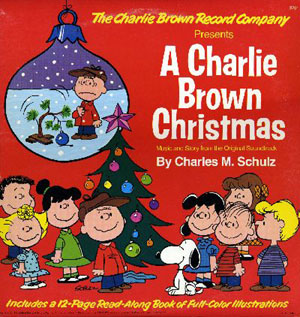
Happy holidays, everyone! This week's show pays tribute to TV's longest-running cartoon special, "A Charlie Brown Christmas". Even though it was first broadcast on December 9, 1965, it has not become dated at all. Its enduring message of religious faith has given it a timeless quality that makes it required viewing for most every family, and the charming musical score by the late Vince Guaraldi has become one of the best-selling albums in jazz history.

On this week's show, you'll hear a slightly revised version of the TV soundtrack as released on a 1977 read-along record on the Charlie Brown label and distributed by Walt Disney's Buena Vista company. Since the LP runs 21 minutes in its entirety, the rest of the hour will be filled with rare outtakes from the 1965 recording sessions with Vince Guaraldi and his trio. Music critic Michelle Mercer's insightful review of the album is available on npr.org.

This past week, the Charlie Brown Christmas special became a center of controversy. A Tennessee Republican posted a comment on his Facebook page implying that President Obama hated the show's Christian message. His sole proof was the fact that Obama had scheduled his American troop deployment announcement on the same night as the special. If you want to read up on this story, start with this Associated Press page and follow the links.

Regardless of your personal views about Obama or the politician, there is an important underlying issue here: Don't you get a little upset when your favorite show gets preempted? Don't you feel helpless when it happens? Here at WLUW, we hear from you listeners every time a scheduled program is replaced by a Loyola Ramblers game. My question to you is: do we, as listeners, have the right to complain about it? Are we being ungrateful for the surplus of free programming? Or does the broadcast media give too much priority to news, sports and weather?

If you have an opinion on this, please comment below. In the meantime, join me next week for the first part of our two-part salute to Chicago's Second City narrated by Robert Klein. Thanks for listening!

Sunday, November 29, 2009

Blogpost #33

Welcome back, rock 'n' rollers! December 4 marks the anniversary of the first and only recording session of the Million Dollar Quartet at Sun Recording Studios in Memphis in 1956. The photo shows Jerry Lee Lewis on the left, Carl Perkins on the guitar, Johnny Cash on the right, Elvis Presley at the piano, and Elvis' girlfriend Marilyn Evans on the piano.

This week's show features selected highlights from the surviving tapes, including studio chatter. Elvis imitates Jackie Wilson's version of "Don't Be Cruel", then struggles to remember all the verses of Chuck Berry's "Brown-Eyed Handsome Man". Jerry Lee Lewis duets with Elvis on a rousing version of "Down By The Riverside", then sings "End Of The Road" at the request of Marilyn Evans. Carl Perkins performs "Keeper Of The Key" on a borrowed guitar. Johnny Cash is nowhere to be heard on the existing tapes, although he insisted that he sang harmonies with the others from start to finish.

Wikipedia has a fairly accurate article on the session along with links to the stage musical now playing at Chicago's Apollo theatre. I have not seen it, but a friend of mine saw it and gave it a rave review. The play hits Broadway in March. First nighters should buy their tickets now.

There are numerous versions of the session available on LP and CD, but the longest available version is "The Complete Million Dollar Quartet" which adds newly discovered instrumental tracks and a version of "Reconsider Baby". It's available online at Amazon.

Next week is my tribute to "A Charlie Brown Christmas". You'll hear outtakes from Vince Guaraldi's million-selling soundtrack album, plus a remixed version of the TV soundtrack as released on a rare 1977 LP. Thanks for listening, and remember: "Christmas is not only getting too commercial, it's getting too dangerous!"

Sunday, November 22, 2009

Blogpost #32

Welcome back, Beatle people! November 24 marks the birthday of Pete Best, born 1941 and still remembered as the unlucky soul who was "drummed out" of the Beatles just before the start of Beatlemania. This week's show features my biography of Pete, including the true reason he was dismissed from the group.

Pete made his American TV debut on March 30, 1964 as a mystery guest on the game show "I've Got A Secret" with Garry Moore as host. A clip from that show is on YouTube.

In March 1982, Pete gave an in-depth interview about his life to Los Angeles FM deejay Jim Ladd, who released an edited version on an LP titled "Like Dreamers Do" that also featured ten tracks from the Beatles' Decca studio sessions. It's currently available on eBay from a collector who wants $120 for a sealed copy. If you're only interested in the interview, it's available on video for only ten bucks from Robert York at eskimo.com.

If you're interested in Pete's life story, he's written three autobiographies, including a 1985 book that completely ignores Neil Aspinall's relationship with Pete's mom. Next week we'll feature highlights from the Million Dollar Quartet sessions from 1956 that inspired the stage musical. Thanks for listening!

Sunday, November 15, 2009

Blogpost #31

Welcome back, radio historians! Today is the 83rd birthday of the National Broadcasting Company. NBC signed on the air November 15, 1926 with a four-hour program of music from various dance bands, comedy from Will Rogers, and numerous speeches from company executives. The program cost $50,000 to produce and was heard as far west as Kansas City via a "chain" of 25 stations.

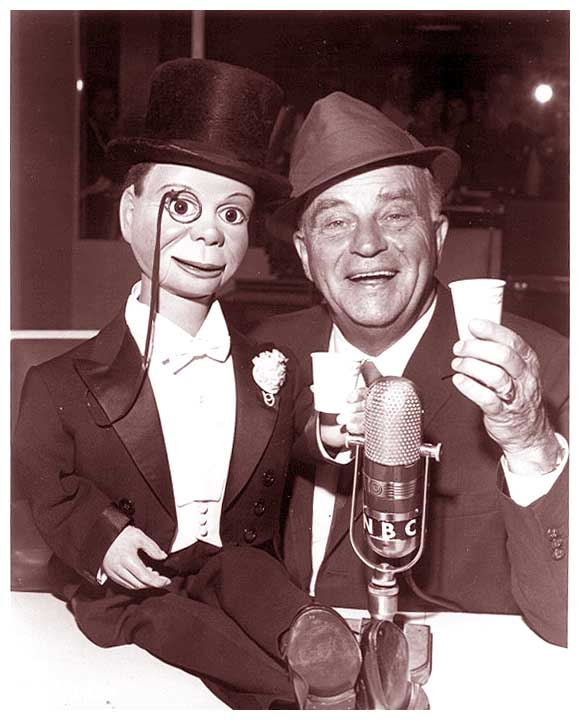
Today, we celebrate NBC's birthday with an hour of excerpts from a 1966 radio special produced for NBC's 40th anniversary. The special was hosted by ventriloquist Edgar Bergen and his dummy Charlie McCarthy. It was heard over the NBC radio network on November 13, 1966 and was later issued as a two-LP set.

I had considered playing the show in its entirety over two weeks, but there were too many things that needed to be edited out. You probably won't miss the commercials for Chase and Sanborn coffee or the annoying laugh tracks, but just in case you'd like to hear the unedited version, it's available for free download at archive.com. I also decided to delete the performances by Al Jolson and Amos 'n' Andy, who represent a style of humor that has no place in the 21st century. If there's a Museum of Outdated Stereotypes, you'll find them there.

Next week, it's another Beatle birthday tribute. This time we're remembering Pete Best, who famously got the sack just days before the group was to make their TV debut. You'll hear a 1982 in-depth interview, plus rare recordings from his two years as a Beatle. There's also a clip from a 1964 TV quiz show where a celebrity panel tries to guess his identity. Thanks for listening!

Sunday, November 8, 2009

Blogpost #30

Welcome back, friends! This week's show is a special Veteran's Day tribute. We'll be saluting all our fighting men and women of past wars by presenting a rare documentary LP from 1966 titled Historic Music and Voices From World War II. The LP was produced by American Heritage Publishing and was narrated by actor Luis Van Rooten. The LP lasts just under an hour, and we'll hear it in its entirety. Unfortunately, little information could be found about the LP on the web. There is a used copy available on eBay, but not for much longer.

Highlights of the documentary include these historic recordings:

Adolph Hitler addresses Nazi Congress at Nuremberg, 1934
Senator Henry Cabot Lodge criticizes League of Nations, 1919
Franklin Roosevelt supports joining the League of Nations, 1920
Emperor Haile Selassie speaks at the League of Nations, 1936
Neville Chamberlain announces peace treaty with Hitler, 1938
Nazi troops terrorize Jews on Night of Broken Glass, 1938
Kate Smith debuts God Bless America on Armistice Day, 1938
Czech Foreign Minister Jan Masaryk appeals to America, 1939
Neville Chamberlain declares war on Germany, 1939
Winston Churchill becomes British Prime Minister, 1940
Benito Mussolini declares war on England and France, 1940
Winston Churchill delivers England's Finest Hour speech, 1940
France is occupied and controlled by Nazi Germany, 1940
German air fighters drop bombs over English Channel, 1940
Princess Elizabeth speaks to evacuated British children, 1940
President Roosevelt announces first draft number drawn, 1940
Joseph Stalin announces Nazi invasion of Western Russia, 1941
Japan massacres American troops at Pearl Harbor, 1941
President Roosevelt delivers Day of Infamy speech, 1941
American troops surrender to Japan in the Philippines, 1942
Sir Harry Lauder sings for Scottish troops at Christmas, 1942
German radio announces British bombing raid on Berlin, 1943
Allied troops announce D-Day landing on French coast, 1944
NBC reporter Tom Traynor describes D-Day landing, 1944
French radio announces liberation of Paris from Nazis, 1944
Charles DeGaulle attacked by snipers at Notre Dame, 1944
General Douglas MacArthur returns to the Philippines, 1944
Allied forces capture Japanese airfields on Iwo Jima, 1945
BBC radio reports discovery of Nazi death camps, 1945
Death camp survivor plays tribute song on Nazi piano, 1945
Prosecutor reveals Nazi horrors at Nuremberg trials, 1946
German radio announces death of Adolph Hitler, 1945
British cathedral bells ring to celebrate V-E Day, 1945
Jesuit priest describes survivors of Hiroshima bomb, 1945
Robert Montgomery honors Roosevelt on V-J Day, 1945

The LP was compiled from thousands of hours of audio saved by archivists in Japan, Germany, France, Russia, and England as well as America. I couldn't think of a better tribute to our troops for this coming Veteran's Day. I hope you'll take the time to visit the grave of a veteran in your family to pay your respects and maybe spruce up the grave site, just we do every year.

Next week marks NBC's 83rd birthday. Once again, we'll pay tribute with lots of clips from NBC's early years of radio broadcasting. Thanks for listening!

Sunday, October 25, 2009

Blogpost #29

Welcome back, friends! Here's a preview of what's coming up for the month of November.

November 2, 1920 marked a milestone in the history of radio. It was on that day that KDKA signed on the air under the ownership of the Westinghouse Electric Company. Today, nearly 90 years later, it is still on the air with its original call letters. Other stations have claimed to have started transmitting prior to 1920, and WBZ claims to have the first legally defined broadcast license in 1921, but only KDKA can claim to have retained its original call letters since 1920.

The station was started by Dr. Frank Conrad, a radio hobbyist who worked for Westinghouse. In the fall of 1920, he was operating a small radio transmitter out of his garage purely for his enjoyment. He would read news items out of the paper and play records from a Victrola. Since microphones hadn't been invented yet, he spoke through a telephone mouthpiece propped up in a cardboard box insulated with cotton. He called his station 8XK.

Harry Davis, Conrad's boss at Westinghouse, knew about his radio hobby but thought nothing of it until a Pittsburgh department store placed an ad offering radio sets to the public for ten dollars. When Davis read the ad, he suddenly realized that radio offered unlimited potential for growth. Not every home could use electricity back then, but any home could use a battery-powered radio. He asked Conrad to start up a radio station for Westinghouse, and he managed to get it on the air just in time to announce a breaking news story: Republican candidate Warren Harding had been elected president. KDKA had scooped every newspaper in Pennsylvania.

To honor this historic occasion, I will be presenting a special two-hour edition of A Time To Remember which will document radio's famous firsts. You'll hear a reenactment of the first broadcast on KDKA along with dozens of other milestones, including the radio debuts of many of radio's best known performers such as Frank Sinatra and Edgar Bergen. You'll also hear an hour-long documentary produced to commemorate KDKA's golden anniversary.

Don't forget, it's a two-hour show next Sunday, November 1. Thanks for reading and thanks for listening.

Sunday, October 4, 2009

Blogpost #28

Welcome back, Beatle people! We're presenting a month-long celebration of John Lennon's birthday as well as the anniversary of the first Beatles single to be released in Britain.

John Lennon was born October 9, 1940, and so was his son Sean (not a coincidence, as it was later revealed). All month long, we'll be listening to excerpts from his final interview taped hours before his death. The interview was conducted in Lennon's New York office by Dave Sholin of San Francisco's KFRC in the early afternoon of December 8, 1980. Dave and three staffers flew back home that evening with two 90 minute cassettes filled with John and Yoko's revealing commentary; by the time the plane landed, Lennon was dead.

Dave had little time to mourn his passing; he suddenly had to deal with dozens of requests for media interviews as 'the last man to interview John Lennon'. With the help of engineer Ron Hummel and writer Laurie Kaye, the historic interview was expanded into a three-hour radio special titled "John Lennon: The Man, The Memory" that first aired December 14, 1980.

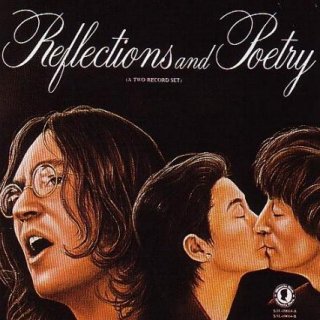
In February of 1984, Silhouette Records compiled a two-LP package titled "Reflections and Poetry" using lengthy excerpts from Dave's special (taped off the air without his permission) with newly added narration from New York radio deejay Bob Miles. It was released in June 1984 in a limited edition of 10,000 copies which sold out within two months. Plans for a repress were foiled by Yoko Ono's attorneys on the grounds that her voice was used without her permission. A British record label simply reedited the material to eliminate any trace of Yoko's voice, and issued it on CD as "The Last Word". Having heard both the CD and vinyl versions of the repackaged interview, I can assure you that the vinyl is definitely more listenable and more complete.

The original two-LP package will be presented in its entirety over the course of four weeks, one side per show. The interview has been restored to its original speed, since Lennon's voice was speeded up on the records. In addition, the vinyl has been cleaned up extensively for broadcast using digital declicking and noise reduction. It actually sounds better than the CD version, which appears to have been mastered from a cassette.

In addition to Lennon's farewell interview, we'll also hear the classic Beatles singles as released in Britain - all 22 of them! This is my way of commemorating the 47th anniversary of the first Beatles single release on October 5, 1962. We started with "Love Me Do" on October 4 and we'll finish up with "Let It Be" on October 26. I hope you'll join us every week as we celebrate Beatle month on A Time To Remember. See you again in November!

Sunday, September 20, 2009

Blogpost #27

Welcome back, loyal listeners. For you newcomers, here's a look at what's coming up soon on A Time To Remember.

September 20: A birthday salute to Ray Charles (born September 23, 1930). A rare concert taped on September 22, 1963 for Brazilian TV. Listen for "Hit The Road Jack", "What'd I Say", "You Don't Know Me" and a dozen other favorites from Ray, his orchestra, and the Raelettes. Bonus track: Ray sings a duet with his biggest fan, Flip Wilson on a February 1, 1973 broadcast of TV's "Flip Wilson Show".

September 27: A birthday salute to Groucho Marx (born October 2, 1890). A rare unedited full-length recording session for the "You Bet Your Life" quiz show from December 5, 1949. Listen for technical errors, retakes, and lots of risque wisecracks from Groucho that never made it past the censor.

October 4: A birthday salute to John Lennon (born October 9, 1940). An historic and poignant interview taped December 8, 1980, just hours before his death. Listen for John's tragically ironic comment: "My work won't be finished until I am dead and buried - and I hope that's a long, long time".

If you have suggestions for future birthday salutes or anniversary tributes, send them to johnbialas@yahoo.com. Thanks for listening. See you again next month!

Sunday, September 13, 2009

Blogpost #26

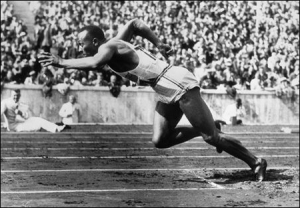
This past September 12 marked what would have been the 96th birthday of the late Jesse Owens, an outstanding track and field star of the early 20th century. As a college athlete in the early 1930's, he tied or broke several world records. His medal-winning performance at the 1936 Olympics in Berlin, Germany established him as the greatest living American athlete.

Sadly, his dire financial condition led him to resign from the American Olympic team to pursue lucrative offers that were later withdrawn. He struggled to support his family, and was often forced to accept embarrassing jobs such as attempting to outrun a racehorse in Cuba.

To his credit, he never lost his dignity or his high moral standards. He launched a new career as a motivational speaker for the state of Illinois, inspiring students and teachers alike to pursue their own level of excellence, just as he did. From the late 50's to the mid 60's, he was a jazz deejay on Chicago radio station WAAF 950 AM. He passed away in 1980, shortly after hearing the disappointing news of the 1980 Olympic boycott.

This week's show draws on a rare collection of audio clips from an out-of-print tribute LP celebrating the life and achievements of Jesse Owens. It's titled "Jesse Owens: The Olympic Years", and it was released in 1983 on the nostalgia label Mark 56 records. I did extensive research to put the audio clips in their proper context, much of it coming from a 2007 book by ESPN's Jeremy Schaap titled "Triumph: The Untold Story of Jesse Owens and Hitler's Olympics". It's available as a "bargain book" from Amazon.

Next week is Ray Charles' birthday, and I'll be playing a rare Brazilian TV concert appearance from 1963 featuring Ray on piano and sax along with his orchestra and his backup singers, the Raelettes. Thanks for listening and thanks for reading.

Sunday, September 6, 2009

Blogpost #25

Walter Cronkite began his career as a radio news reporter, just like I did. Unfortunately, the similarity ends there.

He covered World War II from start to finish as a correspondent for United Press, and joined CBS News in 1950 after being recruited by Edward R. Murrow. He anchored the first half-hour network TV newscast on September 2, 1963, where he presented an exclusive interview with President John Kennedy just a few short weeks before his assassination.

On August 31, 1959, Cronkite marked the 20th anniversary of the start of World War II with an hour-long CBS Radio documentary titled "Blitzkrieg". The program dramatically recounted the events that led up to World War II in Europe, including Adolph Hitler's unprovoked military invasion of Poland. The broadcast received such favorable comment that it was soon released as an LP on Columbia Masterworks. This week's show features that rare album in its entirety, fifty years after its original broadcast. A copy was available on eBay today, and here's a link to it.

Next week's show features a birthday tribute to the late Jesse Owens, gold-medal winning athlete who defeated Germany's best in Track and Field at the 1936 Olympics in Munich, Germany. It was a major embarrassment to Adolph Hitler, who attended the track meet but was so upset by Jesse's victory that he refused to congratulate him afterwards. You'll hear Jesse describing that event in his own words, along with rare clips from interviews and speeches from his later years. Here's a link to a page on About.com that examines the myth of the Hitler snub. Thanks for listening and thanks for listening.

Sunday, August 30, 2009

Blogpost #24

Hello, hello, hello! This week's program is an hour-long salute to one of the most infamous names in broadcasting history. Arthur Godfrey was born August 31, 1903, and I'm remembering his birthday with a collection of rare clips from his various TV and radio shows covering the years 1939 to 1981.

Arthur began his radio announcing career in 1930 and became known for his casual, folksy style of broadcasting. Listeners found him extremely charismatic, which helped make him one of the most effective commercial spokesmen of radio's golden age.

President Roosevelt was a big fan of Arthur's, and he regularly tuned in to his early-morning radio on WJSV, Washington, D.C. There's a story that Roosevelt liked him so much that he arranged to have one of his shows recorded on September 21, 1939 for the National Archives. That recording is available online from archive.org. It's also been digitally restored and is available for purchase from radioarchives.org.

Arthur was offered a morning variety show by CBS Radio after he received critical acclaim for his emotional live eyewitness coverage of Roosevelt's funeral procession on April 14, 1945. You can hear it online on the Eyewitness To History site.

At the height of his popularity in the early fifties, Arthur had a daily radio show and several weekly TV shows. Sadly, his public image as a friendly, trustworthy broadcaster took a beating in the newspapers following his controversial on-air farewell to cast member Julius LaRosa on October 19, 1953. YouTube has several clips from Arthur's TV shows, including an episode of Biography that features Julius looking back on the incident decades later.

Arthur appeared as a guest on many TV talk shows in the sixties and seventies, including one memorable appearance with David Frost when he proudly announced that he'd had a vasectomy. He recorded a single called "This Is All I Ask" in 1964 which he performed on many TV programs, including the Jack Paar Program. That performance is available on DVD from Amazon.

Arthur's farewell appearance on TV came on a 1981 PBS special titled "The Fifties: Moments To Remember" when he reminisced about his career, played a 1953 clip of his show, and performed his 1947 hit "The Too Fat Polka" in the Grand Ballroom of New York's Waldorf-Astoria.

Next week's show will mark the seventieth anniversary of the start of World War II. We'll feature a hard-to-find documentary from a 1959 LP in which the late Walter Cronkite dramatically recaps the events in Europe during the thirties that led up to it. Your homework assignment for next week is to listen to the vintage radio news reports from the BBC Archives to determine why Britain's government declared war on Germany even though their country hadn't been attacked yet. Thanks for listening and thanks for reading.

Sunday, August 23, 2009

Blogpost #23

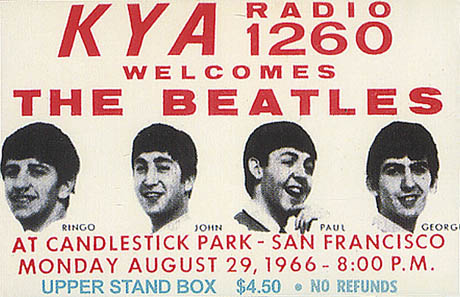
Welcome back, Beatles fans! This week marks the anniversary of their farewell concert at San Francisco's famed Candlestick Park on August 29, 1966. The Beatles' 1969 live rooftop performance (as seen in 'Let It Be) is not generally considered their farewell concert, because it was unannounced and was staged for the cameras. The San Francisco concert came at the end of three weeks of live dates in America, and the Beatles had secretly agreed that it would be their last tour ever.

Candlestick Park was built for baseball teams and not rock bands, so the group was obliged to perform on an elevated stage surrounded by a protective cage and positioned over second base. Shortly before the concert, Paul McCartney asked his press officer Tony Barrow to tape it as a souvenir. He had no time to rent professional recording equipment, so he brought a portable cassette recorder out on the field, pointed his microphone at the speakers and hoped for the best.

The cassette ran for thirty minutes, and was later put up for auction in London. The historic tape was digitally remastered and released by Bulldog Records on LP and CD in 1988 without permission from the Beatles. Bulldog was an Italian label founded in 1987 to exploit a loophole in international copyright law; apparently the Beatles' studio recordings were protected, but not their live concerts.

According to Eric Lefcowitz's 1987 book "Tomorrow Never Knows: The Beatles' Last Concert", the Beatles emerged from the dugout at 9:27 pm, with Paul documenting the event with his camera as he approached the stage. Before the first number started, Ringo accidentally swiveled his mike stand around in the wrong direction, making his drums inaudible for most of the concert. The guitars sounded hollow and distant because they were only being picked up through the vocal mikes.

Paul introduced "If I Needed Someone" as being "recorded by the blah-blah". He was actually referring to the 1966 single version by the Hollies, but Paul muffled their name on purpose because George hated what they did to his song. John introduced "Day Tripper" as "the one about the naughty lady", but couldn't remember when he recorded it. During the mournful "Baby's In Black", the crowd unexpectedly started cheering wildly. Their reaction was completely unconnected to the song; they were just applauding a group of five teenage boys that almost reached the stage before being ejected by security.

George jokingly introduced "I Feel Fine" as a 1959 song, calling it "very old indeed". Paul was very uncomfortable with the windy conditions in Candlestick Park, loudly complaining "It's a bit chilly!" Ringo made a quick adjustment to his microphone stand after realizing he was about to start singing into the wrong end, prompting a sarcastic remark from Paul: "Talented!" Another group of gate-crashers were captured by police as they attempted to rush the stage, and Paul impatiently waited for the crowds to quiet down before starting "Paperback Writer".

Paul introduced the eleventh and final song by wearily asking the crowds to "join in and clap... sing... talk?", to which John added "Dance?" The Beatles chose "Long Tall Sally" as their farewell concert performance after eight years and 1400 shows. Sadly, the song lasted longer than the cassette did. Only the first forty seconds were saved on tape. At 10 pm, the group left the stage, climbed into an armored van, and headed for the airport. On the flight home, George breathed a sigh of relief and announced that he was no longer a Beatle.

After their touring days were over, the group devoted their time to crafting an LP that would recreate the experience of a live concert, which became 1967's critically acclaimed "Sgt. Pepper". The album's success encouraged the Beatles to continue experimenting with new sounds in the recording studio, despite some complaints that they were producing music that was too complex for their teenage followers.

By 1969, the group had abandoned their progressive approach to music for their "Get Back" single, which was designed to recapture the energy and spontaneity of their early hit records. This regressive approach to recording was suggested by Paul, who had claimed to be strongly opposed to the idea back in 1966. "We're never going to do that," he told British radio deejay Ken Douglas during the American tour. "If we ever have to do that - if anyone suddenly says 'You're going too way out, you've got to get back to then' - well, we'll give up, you know?" This ironic and revealing quote comes from a rare LP released in 1966 by the Ring Around The Pops Foundation to raise funds for the blind. It was titled "Beatle Views", and I've never seen a copy anywhere. Edited highlights were released on a 1984 LP from Silhouette Records titled "The British Are Coming", which included a 3-D cover and a pair of cardboard eyeglasses.

The Candlestick Park tape is available on You Tube in four parts, starting with this one. I invite you to tune in to A Time To Remember next Sunday morning for my birthday tribute to the late Arthur Godfrey. He was once regarded as the most popular and powerful announcer in broadcasting. I'll present a live radio interview with Chicago radio personality Ed Schwartz from 1976, plus a live performance with Jose Melis on the Jack Paar Program from 1964. Thanks for listening and thanks for reading.

Sunday, August 16, 2009

Blogpost #22

Greetings, Elvis fans! This week's show is a memorial tribute to Elvis Presley, who died exactly 32 years ago today on August 16, 1977. We're paying our respects to him with a collection of rare early recordings, including the legendary demo disc he made as a present for his mother in the Summer of 1953, around the time this yearbook photo was taken.

What was Elvis like back in those days? According to information he supplied for his high school yearbook and his driver's license, he had brown hair, blue eyes, weighed 153 lbs, stood 5' 11", and lived at 185 Winchester in Memphis, Tennessee. He had just graduated from Hume High School with majors in Shop, History and English.

He was inspired by an article by Clark Porteous published in the Memphis Press-Scimitar on July 15, 1953 about a recording studio called the Memphis Recording Service run by Sam Phillips, whose motto was "We Record Anything - Anywhere - Anytime". The following Saturday, the eighteen-year old Presley came by with his guitar and cut an acetate disc of two slow ballads from the 1940's: "My Happiness" and "That's When Your Heartaches Begin". Elvis later revealed during the "Million Dollar Quartet" session of December 4, 1956 that he'd lost his only copy of the record. It later turned up in the collection of Ed Leek, a retired airline pilot and former classmate of Elvis who had kept it hidden away for thirty-five years. Both sides of the disc can be found on RCA's "Sunrise" 2-disc collection, available from Amazon.

When Elvis died, it seemed as if everyone of his fans needed to get their hands on some kind of souvenir connected to him. A reporter named Roy Blount, Jr. flew to Memphis and arrived at Graceland within hours of his death. He saw a rolled-up copy of the Memphis Press-Scimitar lying on the ground with a rubber band around it, and the gatekeeper told him it was Elvis' last newspaper. In his book "What Men Don't Tell Women", Roy revealed that he took it as a souvenir, and what Elvis fan wouldn't have done the same thing?

My mom was a diehard Elvis fan as well, and in the week after his death she devoted all of her free time to saving every possible Elvis-related TV and radio program on tape. I found a memorable clip from Eddie Schwartz' all-night radio show in which he announces that Elvis "died of natural causes", which was later proven to be untrue. He had actually died of heart failure caused by an overdose of prescription drugs from a doctor who just couldn't say no. There was a real lesson to be learned from his death, and it was a shame that Michael Jackson never learned it.

Shortly after Elvis' death, his former guitar player Scotty Moore gave an interview to a reporter in which he revealed how they made their first record together in 1954 within days of their first meeting. That interview was quickly issued on record to cash in on the demand for fresh Elvis material. This ghoulish piece of exploitation is now ironically a collector's item, but I included a lengthy clip from the album anyway because it's a genuine eyewitness account of history.

From 1954 to 1956, Elvis appeared practically every week on the Louisiana Hayride radio show over KWKH, Shreveport. He plugged his records and his personal appearances, and he got paid thirty dollars a week for the first year. Only a handful of his live broadcasts were saved, and some of them can be found on "The Elvis Broadcasts On Air", a well-packaged CD collection on Stardust. Sound quality varies from excellent to unlistenable, but it's still available from Amazon.

Comedian and talk show host Steve Allen earned the wrath of Elvis fans when he booked him on his prime-time variety show on July 1, 1956 to sing "Hound Dog" in white tie and tails to an actual Bassett hound, who ignored him for the entire song. It was a humiliating experience for Elvis, who never appeared with Steve again. In 1996, Varese Sarabande issued a CD compilation of clips from his various TV shows, and one of them was a comedy sketch featuring Elvis with Andy Griffith and Imogene Coca as stars of a Western-style TV show. I included it for its rarity, not for its comedy. Apparently the CD is pretty rare as well, judging by the price of a used copy on Amazon.

The phrase "Elvis Has Left The Building" is now part of American pop culture, but someone had to be the first one to say it. According to my research, it was first spoken by KWKH announcer Frank Page at the close of a live radio broadcast on December 15, 1956, and I couldn't think of a more perfect way to close my memorial tribute. The only thing I haven't mentioned from the program is an instrumental song from 1937 that I used as background music. It's called "Smoke Rings" and it's by Glen Gray and the Casa Loma Orchestra.

Next week's show will be another tribute to a great rock act. I'll be looking back at the Beatles' farewell stage performance in San Francisco on August 29, 1966. I'll be playing the tape of that concert in its entirety. Thanks for listening.

Sunday, August 9, 2009

Blogpost #21

Hi, crimestoppers! (This is where you respond 'Hi, Steve!') That's a line from Steve Martin's "Wild And Crazy Guy" LP, one of the best selling comedy albums in history.

This week's show is a birthday tribute to Steve, who was born on V-J Day, August 14, 1945. The sleeve above is from his top twenty single "King Tut", which closes this week's show.

As a treat for my listeners, I am sharing one of the rarest albums in my collection. It's a 1978 radio show on LP featuring a revealing interview with Steve conducted by David Brandes. I found a copy in a used record store back in 1982, and I haven't seen another one since. I have seen copies offered online for $68 and up.

The radio show was produced by Warner Brothers to promote his "Wild And Crazy Guy" LP, and it featured clips from his first two albums. Unbelievably, some of the clips included profanity, which I have edited out. This might explain the extreme rarity of the LP. Steve was interviewed in the fall of 1978 when he was in the midst of shooting his "Wild And Crazy Guy" TV special which aired November 22, 1978.

Technical note: this LP is in very poor shape, and it had to be specially remastered for broadcast. Many hours were spent removing clicks, pops, scratches, and surface noise. I'm undecided as to whether it was worth the effort, because now it sounds more like a tape than an album. I'm the only one who knows how much the sound was improved, so I guess it was really just my way of paying tribute to Steve. I feel like I restored the LP just for him, even though he'll never know it.

Last year, Steve published his memoir, "Born Standing Up", now available in paperback from Amazon. It details his strained relationship with his parents, who initially disapproved of his showbiz career. There's a brief reference to this in the radio interview. If you haven't read the book, I recommend it as a companion piece to this program.

Next week, we remember Elvis on the anniversary of his death. Please tune in.

Sunday, August 2, 2009

Blogpost #20

Welcome, Stan Freberg fans! This week's show is a birthday tribute to one of the most imaginative writer-performers of the late 20th century. He'll be turning 83 years young on August 7.

Together with his creative partner Daws Butler (shown on left) he created some of the most brilliant comedy singles of the 1950's, including a few that were too controversial to be released until decades later.

As a special treat for the Freberg faithful, this week's show features an hour-long "concert" of Stan, Daws and his repertory cast performing their greatest hits live before an audience. The performances were compiled from Stan's short-lived 1957 CBS radio comedy-variety series.

"The Yellow Rose Of Texas" comes from a broadcast of August 4, 1957. Stan's parody was released in October 1955 shortly after Mitch Miller's original version topped the singles charts. Alvin Stoller provided the relentless snare drumming.

"The Lone Analyst" is a parody of the Lone Ranger, and was released on a 1955 single as "The Lone Psychiatrist". Co-writer Daws Butler plays nearly every male voice. Stan and Daws revised and expanded this sketch for this broadcast of August 25, 1957.

"The Banana Boat Song" is also known as "Day-O", and was released in April 1957 shortly after Harry Belafonte's version hit the Top Five. Peter Leeds was credited on the single with "interruptions". It was first broadcast on August 25, 1957.

"Wun'erful, Wun'erful!" was performed on a broadcast of August 11, 1957 and released as a two-part single in October 1957. Songs include "Bubbles In The Wine", "Thank You", "Funny Old Hills", "Louise", "Please", and "Moonlight And Shadows".

"Rock Island Line" is a parody of folk balladeers. It was released in July 1956 shortly after Lonnie Donegan's version became a Top Ten hit. "Interruptions" are once again provided by Peter Leeds. This comes from a broadcast of August 18, 1957.

"Sh-Boom" is a parody of a parody. The Crew-Cuts recorded a take-off of the Chords' 1954 single, and their version outsold the original. Stan's version followed in September 1954, and was faithfully recreated for a broadcast of September 29, 1957.

"St. George And The Dragonet" was released in September 1953 and became Stan's only number one single. It was a faithful parody of Jack Webb's "Dragnet" TV series, done with Webb's full cooperation. This comes from a broadcast of September 1, 1957.

"The Honey-Earthers" was released as the flip side of Stan's 1955 "Lone Psychiatrist" single. This sketch imagines the cast of Jackie Gleason's Honeymooners as alien moon creatures. This comes from a broadcast of September 8, 1957.

"The Banana Boat Song" was brought back by listener demand for an encore performance on Stan's farewell broadcast of October 20, 1957. Bandleader Billy May appears briefly to introduce Stan as Lawrence Welk, who shows up just to get the last laugh.

"Heartbreak Hotel" was released in July 1956, months after Elvis Presley topped the charts with it. This abridged version comes from a broadcast of September 15, 1957 and features cameo appearances from Peter Leeds, June Foray, and Daws Butler.

The 1957 series was issued on CD by Radio Spirits, but it is long out of print. You can download the entire series for free from the Internet Archive. There's also an unedited tape of the show's premiere episode available on an animation archive blog produced by the ASIFA of Hollywood.

Next week's show is another birthday tribute to a favorite comedy star: Steve Martin. Join us for an hour-long documentary that captures him at the height of his popularity in 1978. It'll be a Wild And Crazy Show.

Sunday, July 26, 2009

Blogpost #19

Welcome back, friends! Last week, we were all just a little too depressed to enjoy celebrating Apollo 11's 40th anniversary. Now that Walter Cronkite has been laid to rest, we can take the time to properly reflect on this historic occasion.

As a child, I collected souvenir LP records of the Apollo moon mission and even taped the live TV coverage on cassette. Those tapes were amateurishly recorded, so of course you'll probably never hear them played on my show.

There were dozens, if not hundreds, of Apollo 11 souvenir LPs released in the weeks and months after the astronauts returned to earth. To my knowledge, none of them ever made the Billboard album charts, despite being released on well-known labels such as Capitol and RCA. A few came from small regional labels, and one came from a Chicago radio station. It was titled "Man And The Moon", and it was produced for WBBM Newsradio 78.

Shortly after WBBM first signed on as an all-news station in 1968, station management began assigning their staffers to produce documentaries for LP release. Four LPs were released by WBBM between 1969 and 1971, and they were all offered as promotional items through various Chicago-based banks. John Hultman was responsible for the well-produced "Prelude To The Seventies" LP, a year-end wrap-up of the news events of 1969. Incidentally, he's still anchoring on the air at WBBM four decades later.

Tom Clark was one of the original news anchors at WBBM, starting in May 1968 as midday anchor. In 1969, he was assigned to produce an album about the upcoming Apollo 11 moon mission. The finished product remains fascinating listening today. Unlike other producers, he didn't rely heavily on the astronauts' radio transmissions to fill out the album. Instead, he did extensive research and conducted exclusive interviews. My only major fault with the documentary is that it ends abruptly without covering the astronauts' return to Earth. I can't confirm it, but I suspect that the album was completed before the moon mission was.

The album has been out of print for decades, but copies are available from various rare record dealers on the web, and I managed to track down a copy at Reckless Records in Chicago. If you'd like to add it to your collection, visit reckless.com and type MAN & MOON into their search engine. Their reviewer describes it as a "great record" with "some really cheezy (sp) poems". If you're listening up on Chicago's North Side near our WLUW studios, call their Broadway store at 773-404-5079 to see if it's still in stock. Ask them to check in the Spoken Word bin, and be sure to mention this blog if you decide to buy it.

Next week: a birthday salute to master satirist and comedian Stan Freberg. We'll hear his classic singles from the fifties performed live before a studio audience with the original cast, including an extended version of his classic Lawrence Welk parody.

Sunday, July 19, 2009

Blogpost #18

R.I.P., Walter Cronkite.

He was the most admired and respected newsman in the history of television.

We trusted him because he was hardworking, mature and responsible.

He defined the role of news anchor for two generations of broadcasters.

He trusted his instincts and took a stand on the issues that were important to him.

His influence as a journalist continued for decades after his retirement.

He will never be forgotten.

It will be noted that he died just as America was preparing to celebrate the 40th anniversary of the Apollo 11 moon landing.

This week's program honors his memory with an excerpt from his rare 1969 documentary LP "Man On The Moon".

The LP was briefly available from a collector on Ebay, and other copies may be found on the Internet in the future.

As a child, I did not dream of being an astronaut on the moon; instead, I dreamed of covering it live like Walter Cronkite.

This week's program is my attempt at covering the Apollo 11 launch live from Cape Kennedy, even if it comes 40 years too late.

To make this recreation as accurate as possible, I used my own collection of Apollo 11 news clippings from 1969.

The liftoff takes place at exactly 32 minutes past the hour, just as it did back on that early July morning in 1969.

The launch is followed by a specially-edited montage of clips from the original NASA radio conversations with the astronauts.

This week's show ends with the landing on Tranquility Base on July 20, 1969, when Neil Armstrong announced "The Eagle has landed."

I invite you to tune in again next week for part two, which will include the first moonwalk and the return trip to Earth. I hope you don't mind having to wait a whole week for the ending.

Sunday, July 12, 2009

Blogpost #17

Welcome, Bill Cosby Fans! This week's program is an hour-long tribute to Mr. Cosby in honor of his 72nd birthday. We'll be listening to rare full-length clips from his early TV appearances. The photo here dates from 1968, when he was hosting a daily 5-minute radio comedy series for Coca-Cola.

First, we'll hear Mr. Cosby's prime-time debut on the Jack Paar Program from October 4, 1963, taken from the DVD collection "Time-Life Presents The Golden Age Of Comedy" (currently out of stock at Amazon.com). Cosby debuts his "Noah" routine.

Next, it's the Dean Martin Show from February 10, 1966, taken from volume four of the "Best Of The Dean Martin Variety Show" collection on DVD (long out of print but available from Amazon.com). Cosby debuts his "Revenge" routine.

Next, it's another Jack Paar Program from May 8, 1964. Cosby returns with a monologue on movie characters. This comes from "The Jack Paar Collection" on DVD (still available at Amazon.com).

Next, it's Bill Cosby with Diana Ross and the Jackson Five on "Diana" (a Music-Variety Special) from April 18, 1971. The TV show has never been legally available, but the TV Soundtrack Album has been available on LP since 1971.

Next, it's a collection of sketches from The Electric Company, an Educational-Comedy Series that aired on PBS during 1971-76. Cosby was a cast member for the first season only. You'll find two volumes of "The Best Of The Electric Company" on DVD at Amazon.com. Listen for Rita Moreno as Otto the Director, Jim Boyd as the Mission Control Director, Morgan Freeman as the Angry Man and Skip Hinnant as Fargo North, Decoder.

Next, it's two unedited segments of The Dick Cavett Show (a Talk-Variety Series) from February 21, 1973 with Cosby's comedy idol Jack Benny sitting in. This comes from The Dick Cavett Show: Comic Legends on DVD (still available at Amazon.com).

Finally, it's a rare clip from The New Bill Cosby Show (a Comedy-Variety Series) from February 19, 1973 featuring Cosby's only on-camera interview with Groucho Marx. This clip comes from a documentary called The Unknown Marx Brothers on DVD, which is long out of print.

Next week: the 40th anniversary of the Apollo 11 moon landing. See you then!